How Much House Can I Actually Afford?
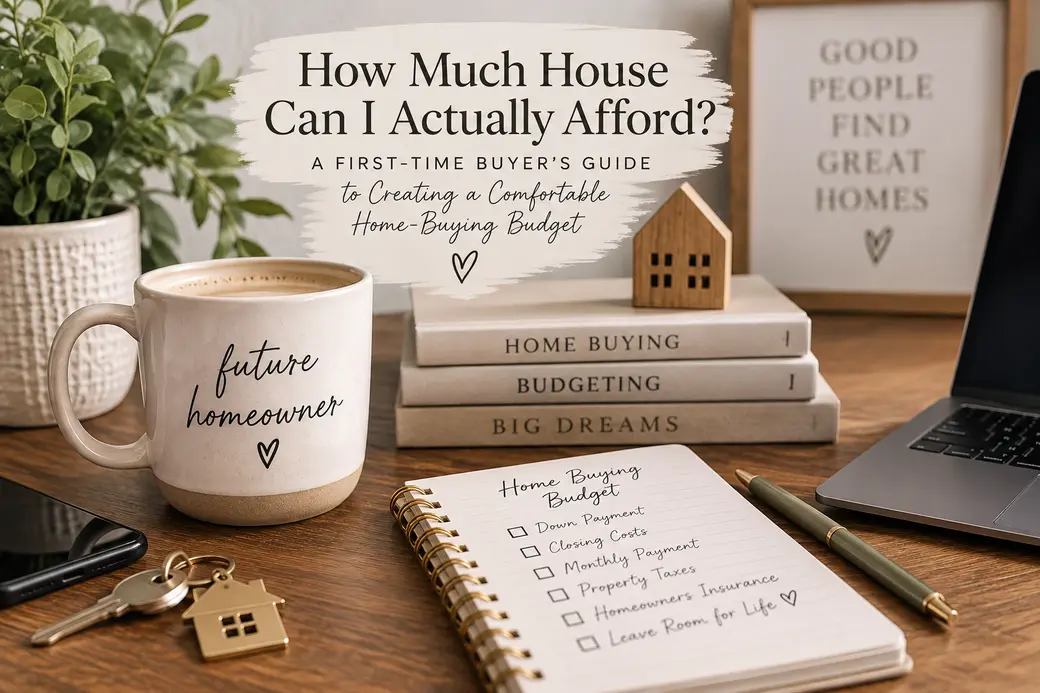
A First-Time Buyer’s Guide to Creating a Comfortable Home-Buying Budget
If you’re thinking about buying your first home, one of the biggest questions is probably:
“How much house can I actually afford?”
And honestly, that question is more important than knowing how much a lender will approve you for.
A lender can tell you the maximum loan amount you may qualify for. But your comfortable home-buying budget is personal to you. It needs to leave room for your everyday life, your other financial goals, and the unexpected expenses that inevitably come with owning a home. Before you fall in love with a house online, let’s break down what you should actually consider when determining your home-buying budget.
Start With the Monthly Payment—Not the Home Price
One of the easiest mistakes first-time buyers make is starting with a home price.
You might say, “I think I can afford a $350,000 house.”
But the purchase price doesn’t tell you what your monthly housing expense will actually look like.
Your monthly payment can include:
- Principal
- Interest
- Property taxes
- Homeowners insurance
- Private mortgage insurance (PMI), if applicable
- HOA fees, if applicable
Two homes with the exact same purchase price can have noticeably different monthly payments depending on taxes, insurance, HOA fees, interest rate, and loan program.
Tip: Instead of asking, “What’s the most expensive house I can buy?” ask, “What monthly payment would allow me to enjoy my home without feeling financially stretched?”
That’s a much better place to start.
Your Preapproval Is a Starting Point—Not a Spending Target
Getting preapproved for a mortgage is an important step in the buying process. It gives you a much better understanding of your financing options and shows sellers that you’re a serious buyer. But here’s something I want every first-time buyer to remember: Your preapproval amount is not necessarily your ideal budget.
For example, if you’re approved to purchase a $400,000 home, that doesn’t automatically mean you should spend $400,000.
Think about everything else your income has to cover:
- Car payments
- Student loans
- Credit cards
- Childcare
- Groceries
- Utilities
- Insurance
- Saving for retirement
- Vacations
- Activities for the kids
- Home maintenance
- And, you know… actually enjoying your life.
A home should be part of your financial plan—not your entire financial plan.
How Much Money Do You Need to Buy a Home?
Another common misconception is that you need 20% down to buy a house. That’s not necessarily true. Depending on your loan program and individual circumstances, you may have options that require considerably less than 20% down. But your down payment isn’t the only upfront expense you’ll need to plan for.
You may also need money for:
Down Payment
This is the portion of the purchase price you’re paying upfront rather than financing through your mortgage. Your required down payment will depend on the type of loan you’re using and your specific financial situation.
Closing Costs
Closing costs can include lender fees, title-related expenses, recording fees, prepaid items, and other costs associated with completing your purchase. The exact amount varies, which is why it’s important to talk with your lender early about what you should realistically expect.
Earnest Money
Earnest money is a deposit that typically accompanies your offer. It demonstrates that you’re serious about purchasing the property. It isn’t simply an extra fee you lose—it is generally credited toward your purchase at closing, assuming the transaction proceeds according to the contract.
Inspection
A home inspection is an important part of the buying process and is typically paid for by the buyer.
Appraisal
Depending on your loan and transaction, an appraisal may be required to help determine the property’s value for lending purposes.
Moving & Immediate Expenses
And then there’s the stuff nobody puts on the mortgage worksheet.
Moving.
New locks.
Paint.
Furniture.
That one room you’ve suddenly decided absolutely needs to be redecorated.
Give yourself some breathing room.
Don’t Forget About the Cost of Owning the Home
When you rent, something breaks and you call the landlord. When you own the home, congratulations—you are now the landlord! Homeownership comes with ongoing expenses beyond your mortgage payment.
You should consider budgeting for:
- Routine maintenance
- Repairs
- HVAC servicing
- Plumbing issues
- Appliances
- Landscaping
- Snow removal
- Utilities
- Larger future projects
You don’t need to have thousands of dollars sitting around before you’re allowed to become a homeowner. But having some emergency savings after closing can make homeownership feel significantly less stressful.
What About Property Taxes?
If you’re buying a home in Illinois, property taxes are an especially important part of your budget. Don’t look at the purchase price alone. When comparing homes, look at the actual property taxes associated with the property and understand how those taxes factor into your estimated monthly payment. This is one reason working with a local Realtor and lender can be incredibly helpful. If you’re looking at homes in Plainfield, Naperville, Joliet, Shorewood, Romeoville, Lockport, or another Southwest Suburban community, the numbers can look different from one property to another. The house price is only part of the equation.
What If My Budget Is Smaller Than I Hoped?
Don’t automatically assume that means you can’t buy. This is where getting creative can help.
You might consider:
- Looking at different neighborhoods
- Expanding your search area
- Considering a different property type
- Adjusting your must-have list
- Looking at homes that need cosmetic updates
- Exploring different loan programs with your lender
- Saving a little longer
- Paying down debt before purchasing
Your first home doesn’t have to be your forever home. It just needs to be a home that makes sense for your life right now. And sometimes the best house isn’t the one with every single thing on your wish list. It’s the one where you can make the payment comfortably, enjoy the neighborhood, and still have money left over for everything else that matters.
A Simple Way to Think About Your Home-Buying Budget
Before you start seriously shopping, ask yourself these questions:
1. What monthly payment feels comfortable?
Not the maximum. Comfortable.
2. How much cash do I have available?
Consider your down payment, closing costs, inspection, moving expenses, and emergency savings.
3. What other monthly debts do I have?
Car loans, student loans, credit cards, personal loans, and other recurring obligations all matter.
4. What expenses are coming up?
Think about childcare, school expenses, vacations, vehicle purchases, or other major expenses.
5. How much do I want left over every month?
This one is huge. You shouldn’t have to stop saving, stop traveling, stop taking your kids places, or stop enjoying your life just because you bought a house.
The Right Home-Buying Budget Is the One You Can Live With
Buying a home is exciting. It’s easy to start scrolling through listings and gradually convince yourself that you can stretch just a little bit more for the perfect kitchen, bigger yard, or extra bedroom. But before you start falling in love with houses, figure out what makes sense financially. A successful home purchase isn’t just about getting approved. It’s about finding a home you love at a payment you can comfortably live with.
And if you’re a first-time buyer, you don’t have to have every answer before you get started. A good lender can help you understand your financing options, and a good Realtor can help you understand how those numbers translate into the homes and neighborhoods you’re considering.
Not sure where your budget should start?
You don’t have to figure it out alone. If you’re thinking about buying your first home in Plainfield or one of the surrounding Southwest Suburbs, I’m happy to help you talk through the process, figure out what questions to ask, and build a plan that makes sense for you—even if you’re not ready to buy tomorrow.
Let’s make your first home purchase feel a little less overwhelming and a whole lot more understandable.
Categories
Recent Posts