What Are Closing Costs- and Who Actually Pays Them?
Buying a home comes with more costs than just the down payment. And if you’re a first-time buyer, the phrase “closing costs” can sound like one giant mystery fee that magically appears at the end.
It’s not.
Closing costs are made up of a collection of expenses related to getting your mortgage, transferring ownership of the property, and completing the purchase. The exact amount varies from one transaction to another, which is why it’s important to understand what you may be paying for before you get to the closing table.
Let’s break it down.
So, What Exactly Are Closing Costs?
Closing costs are the fees and prepaid expenses associated with purchasing a home.
They can include things like:
- Lender and loan-related fees
- Title services and title insurance
- Recording fees
- Appraisal fees
- Homeowners insurance
- Property taxes and other prepaid expenses
- Attorney fees, depending on the transaction
- Other costs required to complete the purchase
Not every buyer will pay every one of these expenses, and the amount can vary based on your loan, the property, the lender, and the specific terms of your purchase. That's why you shouldn't assume that two buyers purchasing similarly priced homes will have exactly the same closing costs.
How Much Should You Expect to Pay?
There isn't one universal number that applies to every buyer. Your lender will provide estimates of your expected closing costs as you move through the mortgage process, and you'll receive a Loan Estimate early in the process that outlines many of the costs associated with your loan. Later, your Closing Disclosure will provide the final details of what you'll need to bring to closing.
The important takeaway? Don't wait until the week of closing to find out how much money you'll need. Understanding your estimated cash-to-close early gives you time to plan—and helps prevent an unpleasant surprise when you're already juggling a million other things.
But Who Actually Pays Closing Costs?
This is where things get interesting. The buyer typically pays many of the costs associated with purchasing the home, but that doesn't necessarily mean the buyer has to pay every expense out of their own pocket. Depending on the transaction, the seller may agree to contribute toward some of the buyer's closing costs. These are commonly referred to as seller concessions or seller credits. For example, a buyer might negotiate for the seller to contribute a certain amount toward eligible closing costs as part of the purchase agreement.
But—and this is important—seller contributions are not unlimited. The amount a seller can contribute may depend on the type of mortgage you're using, the amount of your down payment, the property, and other loan guidelines. Your lender can tell you what is allowed for your specific situation.
Can Closing Costs Be Negotiated?
Sometimes, yes. Real estate transactions have a lot of moving pieces, and the terms of the purchase can sometimes be negotiated between the buyer and seller. A buyer may ask the seller to contribute toward certain closing costs as part of an offer. Whether the seller agrees depends on the circumstances. If you're in a competitive market with multiple offers, asking for seller credits may make your offer less attractive than another offer with fewer concessions.
On the other hand, if a home has been sitting on the market, the seller may be more open to negotiating. This is one of the reasons the strategy behind an offer matters. It's not just about the purchase price. The overall terms of the offer can matter, too.
What About the Seller's Closing Costs?
Here's another common misconception: the seller doesn't simply hand over the keys and walk away with the entire sale price.
Sellers can have their own closing expenses, which may include things such as commissions, title-related expenses, attorney fees, transfer taxes, mortgage payoff amounts, and other transaction-specific costs. The exact expenses vary depending on the transaction and location.
So when you see a home listed for $400,000, that doesn't mean the seller is necessarily walking away with $400,000. And when you're buying a $400,000 home, that doesn't mean $400,000 is the only number you need to think about either.
Closing Costs vs. Down Payment
This distinction is really important for first-time buyers. Your down payment is the portion of the home's purchase price you're paying upfront rather than financing with your mortgage. Your closing costs are the various expenses associated with completing the purchase and obtaining your loan. They're two different things.
So if you're planning to buy a home, don't simply calculate: Purchase price × down payment percentage = money needed
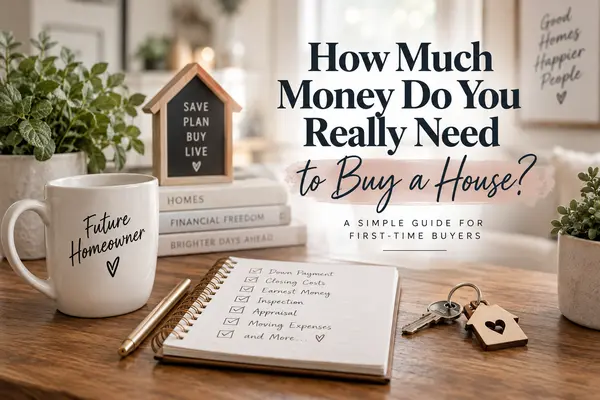
There are additional costs to account for. If you haven't read my guide on how much money you really need to buy a house, that's a great place to start. I break down the different expenses buyers should plan for—and why you don't want to drain your savings just to get the keys.
What Is “Cash to Close”?
You may also hear your lender use the phrase cash to close. This is essentially the amount you'll need to bring to the closing transaction after accounting for things like your down payment, closing costs, credits, deposits you've already made, and other adjustments.
It's not necessarily the same as your total closing costs. For example, if you've already paid earnest money, that amount is generally credited toward your purchase rather than being paid all over again at closing. Your final Closing Disclosure will show the numbers and adjustments that make up your final amount due.
So… Who Pays?
The short answer is: It depends.
Buyers are generally responsible for many costs associated with purchasing a home, while sellers have their own transaction expenses. But some costs—and who ultimately pays them—can be negotiated as part of the purchase agreement, subject to applicable loan and transaction rules. That's why it's important to look at the entire deal, not just the purchase price.
A $350,000 home with one set of terms could have a very different financial picture from a $350,000 home with another.
The Best Thing You Can Do as a Buyer
Don't be afraid of closing costs. They're not a mysterious pile of random fees designed to ruin your closing day! They're simply the collection of expenses involved in getting the transaction completed. The key is to understand them early.
Talk with your lender about your estimated closing costs. Ask questions when something doesn't make sense. Know how much cash you'll need. And when you're making an offer, understand how the terms you're negotiating could affect the money you'll need to bring to closing.
The goal isn't just to get to the closing table. It's to get there feeling prepared.
---
One Last Thing:
Buying a home is a big financial decision, and there will probably be moments when you look at a document and think, “Okay… what the heck is THAT?” That's normal! You don't need to become a mortgage expert, title expert, or real estate attorney overnight. You just need people around you who are willing to explain what's happening, answer your questions, and help you understand the decisions you're making.
That's what I'm here for.
If you're thinking about buying a home in Plainfield or one of the surrounding Southwest Suburbs, I'd be happy to help you understand the process—from the first conversation about your budget all the way to getting the keys. You don't have to figure it all out alone.
Categories
Recent Posts